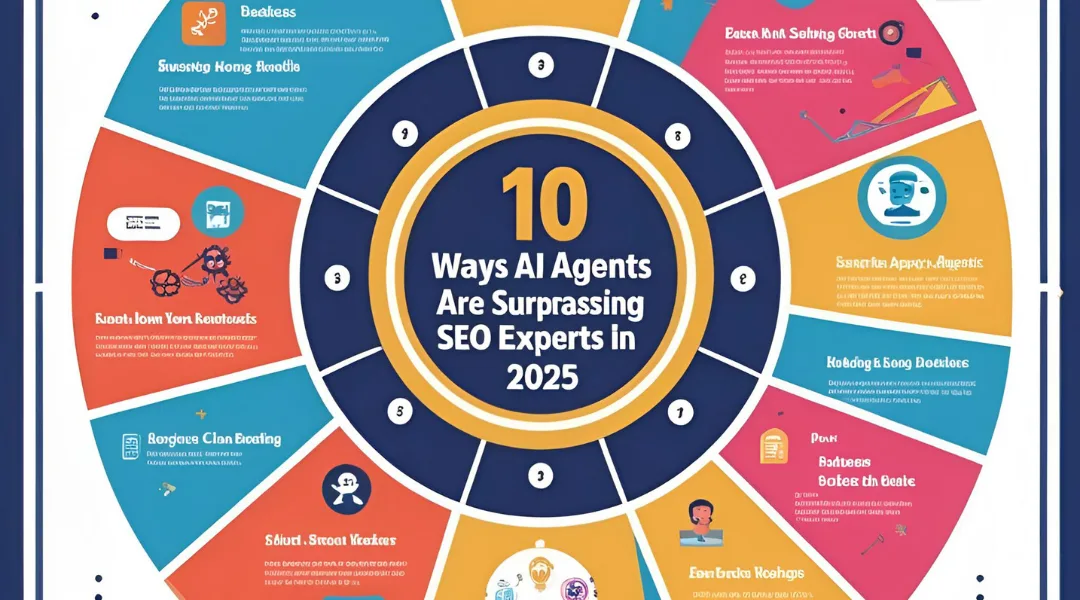
10 Surprising Ways AI Agents Are Outranking SEO Experts
Introduction
SEO is changing—fast. Remember when backlinks, keywords, and meta tags ruled the game? Those days are fading. AI agents are stepping in and, in many cases, outperforming traditional SEO experts.
You might be wondering—how? Today, we’ll explore 10 surprising ways AI is outranking the people who once ruled Google. It’s not about robots vs humans. It’s about who’s adapting and who’s not.
1. Real-Time Data Analysis
Instant SERP Tracking
While SEO experts manually check rankings, AI agents monitor SERPs in real time across thousands of keywords. There are no coffee breaks, no time off, just constant monitoring, adjustments, and reporting.
Adapting to Google Algorithm Changes
Google updates its algorithm… a lot. AI agents detect shifts in ranking patterns within minutes, far quicker than any human. They instantly tweak strategies while humans are still scratching their heads.
2. Predictive SEO with AI
Understanding User Behaviour Before It Happens
AI doesn’t just react; it predicts. Machine learning models analyze historical data, seasonality, and engagement patterns to forecast future search trends.
AI-Powered Keyword Forecasting
Instead of relying on yesterday’s keyword tools, AI agents suggest keywords likely to surge in the next few weeks, giving you a head start before your competitors catch on.
3. Automated Content Creation
Human-Like Writing with NLP
With Natural Language Processing (NLP), AI can now write blog posts, product descriptions, and even video scripts that feel authentically human. Some readers can’t even tell the difference.
Scaling Content Production 10x Faster
A human might write 2 blog posts per day. An AI agent can write 20, without burnout or delays. That’s how brands are scaling content without scaling budgets.
4. Personalised User Experiences
AI-Driven Dynamic Content
AI tailors content based on who’s visiting your site. An SEO expert might target a general audience. AI shows different versions of the same page based on age, location, or device.
Tailored On-Site SEO
From dynamic meta tags to customized CTAs, AI ensures each visitor sees exactly what they need to convert. No guessing. Just results.
5. Voice Search Optimisation
Conversational AI Adapting to Natural Language Queries
People don’t search like robots anymore. They ask full questions. AI understands this and crafts content around long-tail, question-based queries, giving voice SEO a major boost.
Schema Implementation and Rich Snippets Automation
Instead of manually adding structured data, AI agents insert it automatically, improving chances for featured snippets, voice answers, and more.
6. Zero-Click Search Domination
Snagging Featured Snippets with Machine Learning
Featured snippets = the holy grail of SEO. AI analyzes what Google wants and replicates the structure to win that top box. Human guesswork? Too slow.
Data Structuring for Better Crawlability
AI restructures your data in formats that Google loves—tables, lists, and FAQs—helping your content get displayed without needing a single click.
7. Advanced Competitor Analysis
AI vs. Human: Who Spies Better?
AI scrapes and compares millions of data points from competitor sites instantly. It doesn’t just tell you what they’re ranking for—it tells you why and how.
Predictive Insights from Competitor Strategies
AI tools predict which keywords your competitors will likely target next, letting you intercept their strategy before they even launch.
8. Internal Linking Strategies Powered by AI
Smarter Link Placements
Forget outdated linking rules. AI scans your entire site and places internal links based on contextual relevance and SEO value, not arbitrary targets.
Reducing Bounce Rates Through Contextual Relevance
AI-guided linking means users are led to more relevant pages, increasing time-on-site and reducing bounce rates—two key ranking signals.
9. Enhanced Technical SEO
AI Bots for Website Audits
No more manual crawl reports. AI bots perform daily technical audits, flagging 404s, speed issues, mobile usability, and more—before Google notices.
Fixing Issues Before They Affect Rankings
Thanks to predictive modeling, AI agents solve problems preemptively, ensuring your rankings stay stable, even during algorithm updates.
10. AI Agents + Humans = Unstoppable Force
Collaboration Instead of Competition
Here’s the kicker: AI isn’t here to replace SEO experts. It’s here to empower them. The best strategies? They come from humans using AI as their secret weapon.
Future-Proofing Your SEO Strategy
SEO isn’t dead. It’s evolving. The future belongs to those who embrace AI without abandoning their human creativity.
Conclusion
It’s clear now—AI agents aren’t just fancy tools; they’re game-changers. From content creation to technical SEO and user experience, they’re reshaping how we rank on Google. But this isn’t the end for SEO experts. It’s a call to adapt, evolve, and integrate.
Use AI as a co-pilot, not a competitor. Those who do? They’ll dominate the SERPs of tomorrow.
FAQs
1. What’s the best AI tool for SEO in 2025?
There’s no one-size-fits-all, but Jasper, SurferSEO, and Frase are still top-tier tools. GPT-based SEO agents are also on the rise.
2. Can AI replace SEO experts?
Not entirely. AI is powerful, but strategy, creativity, and human insight are still irreplaceable. The best results come from collaboration.
3. Is AI content penalized by Google?
Not if it’s helpful, original, and high-quality. Google’s focus is on content value, not content source.
4. How do AI agents predict SEO trends?
They analyze massive datasets from search engines, social media, and user behavior to forecast which keywords and formats will trend.
5. Should I fire my SEO team for AI tools?
Definitely not! Instead, empower your team with AI. Use tools to automate, not replace.