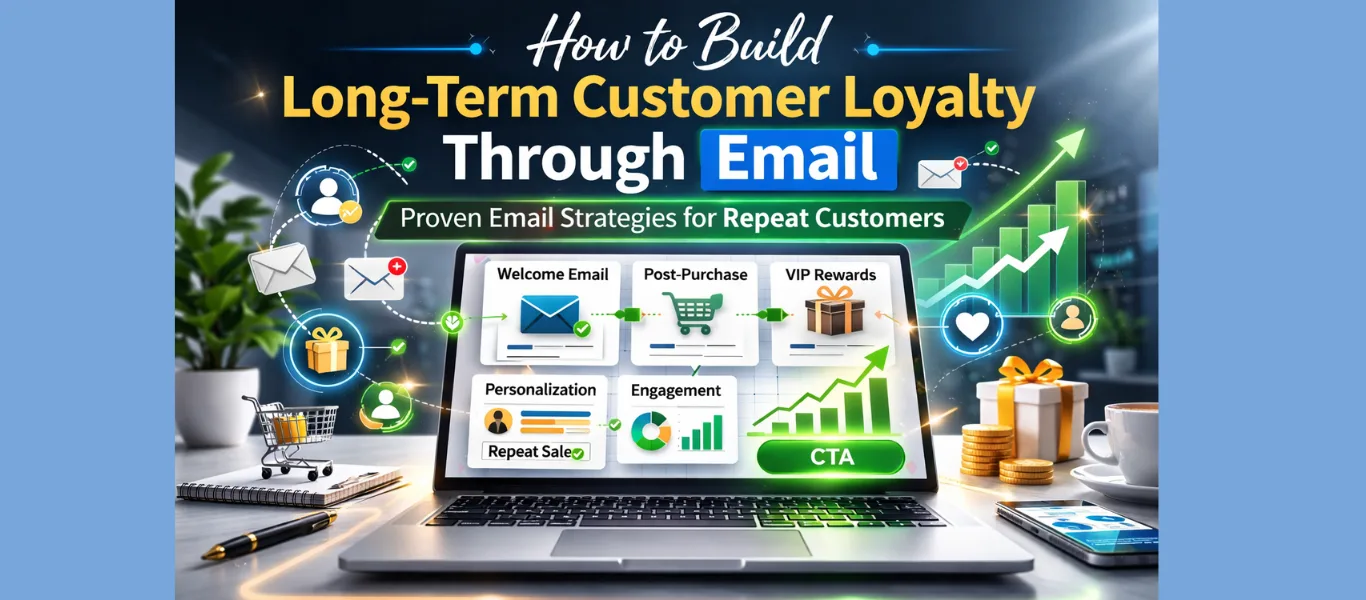
🪄 How to Build Long-Term Customer Loyalty Through Email
Most brands obsess over getting the first sale.
Smart brands focus on what comes after.
Because real growth doesn’t come from one-time buyers—it comes from loyal customers who buy again and again.
And one of the most powerful tools to build that loyalty?
Email.
In this guide, you’ll learn how to use email marketing strategies to build trust, deepen relationships, and turn customers into lifelong fans.
Why Email Is the Secret to Customer Loyalty
Social media comes and goes.
Ads get expensive.
But email?
You own it.
It gives you a direct line to your customers—where you can build trust, consistency, and emotional connection.
And loyalty is built on exactly those things.
1. Start with a Powerful Welcome Sequence
First impressions matter.
Your welcome email is your first opportunity to build trust.
What most brands do wrong
They send a basic “Thanks for subscribing” email… and stop there.
What you should do instead
Create a 3–5 email welcome sequence:
Email 1: Warm introduction + brand story
Email 2: Value (tips, insights, or useful content)
Email 3: Social proof (reviews, testimonials)
Email 4: Offer or product introduction
Example
“Welcome! Here’s how we help you solve [pain point]—starting today.”
This builds a connection before selling.
2. Use Personalization That Feels Human
Generic emails feel cold.
Personalized emails feel relevant.
And relevance builds loyalty.
Go beyond just first names
Use:
-
Purchase history
-
Browsing behavior
-
Preferences
-
Location
Example
“Based on your last purchase, we picked something you’ll love.”
This makes customers feel understood — not marketed to.
3. Deliver Consistent Value (Not Just Promotions)
If every email you send is a sales pitch…
People will stop opening them.
The rule:
Give more than you ask.
Send emails like:
✔ Tips and how-to guides
✔ Insider insights
✔ Product usage ideas
✔ Educational content
Example
If you sell skincare:
“3 mistakes ruining your skincare routine (and how to fix them).”
Now you’re not just a seller.
You’re a trusted advisor.
4. Use Emotional Triggers to Build Connection
Loyalty isn’t logical.
It’s emotional.
Use psychological triggers in your emails:
-
Belonging → “Join 10,000 happy customers.”
-
Trust → Testimonials and reviews
-
Exclusivity → VIP access
-
Gratitude → “We appreciate you.”
Example
“You’re not just a customer—you’re part of our community.”
This builds identity-based loyalty.
5. Create Post-Purchase Email Experiences
Most brands disappear after the sale.
Big mistake.
The post-purchase phase is where loyalty is built.
Send these emails:
✔ Order confirmation (with personality)
✔ Product usage tips
✔ Cross-sell recommendations
✔ Feedback requests
Example
“Here’s how to get the best results from your purchase.”
This reduces buyer’s remorse and increases repeat purchases.
6. Reward Loyalty (Make Customers Feel Special)
People stay loyal where they feel valued.
Use loyalty-driven emails:
-
Exclusive discounts
-
Early access to new products
-
VIP-only content
-
Birthday offers
Example
“You’re one of our top customers—enjoy early access before anyone else.”
This creates exclusivity and appreciation.
7. Build Automated Email Flows
Consistency builds trust.
Automation makes consistency possible.
Essential email flows:
✔ Welcome sequence
✔ Abandoned cart emails
✔ Post-purchase sequence
✔ Re-engagement emails
These flows work 24/7 to build relationships and drive revenue.
8. Re-Engage Inactive Subscribers
Not every subscriber stays active.
But that doesn’t mean they’re lost.
Use re-engagement emails:
-
“We miss you” campaigns
-
Special comeback offers
-
Surveys to understand behavior
Example
“Still interested? Here’s 15% off to come back.”
This can revive cold subscribers into buyers.
Real Example of Loyalty-Focused Email Copy
Subject Line:
“We saved this just for you.”
Email:
Hey Sarah,
We noticed you loved our last collection.
So we picked something special — just for you.
As a thank you, here’s early access before it goes public.
👉 Shop Your Exclusive Picks
This combines:
✔ Personalization
✔ Exclusivity
✔ Appreciation
That’s how loyalty is built.
Internal Resources to Explore
To go deeper, check out these guides:
-
Improve your subject lines → https://blogwithjawed.com/10-proven-email-subject-lines/
-
Fix common mistakes → https://blogwithjawed.com/ecommerce-email-copywriting-mistakes-that-kill-sales/
-
Boost conversions → https://blogwithjawed.com/scarcity-urgency-ecommerce-emails/
-
Personalization tactics → https://blogwithjawed.com/email-personalization-tactis/
These will help you strengthen your overall email marketing strategy.
Quick Checklist for Building Email Loyalty
Before you send your next email, ask:
✔ Is this personalized?
✔ Does it provide value?
✔ Does it build trust?
✔ Does it make the customer feel special?
✔ Does it encourage long-term engagement?
If yes, you’re on the right track.
Final Thoughts
Customer loyalty isn’t built overnight.
It’s built through consistent, meaningful communication.
And email gives you the perfect platform to do it.
When done right, your emails won’t just sell.
They will:
✔ Build trust
✔ Strengthen relationships
✔ Create repeat customers
✔ Drive long-term revenue
Because in e-commerce…
The brands that win aren’t the ones with the most traffic.
They’re the ones with the most loyal customers.