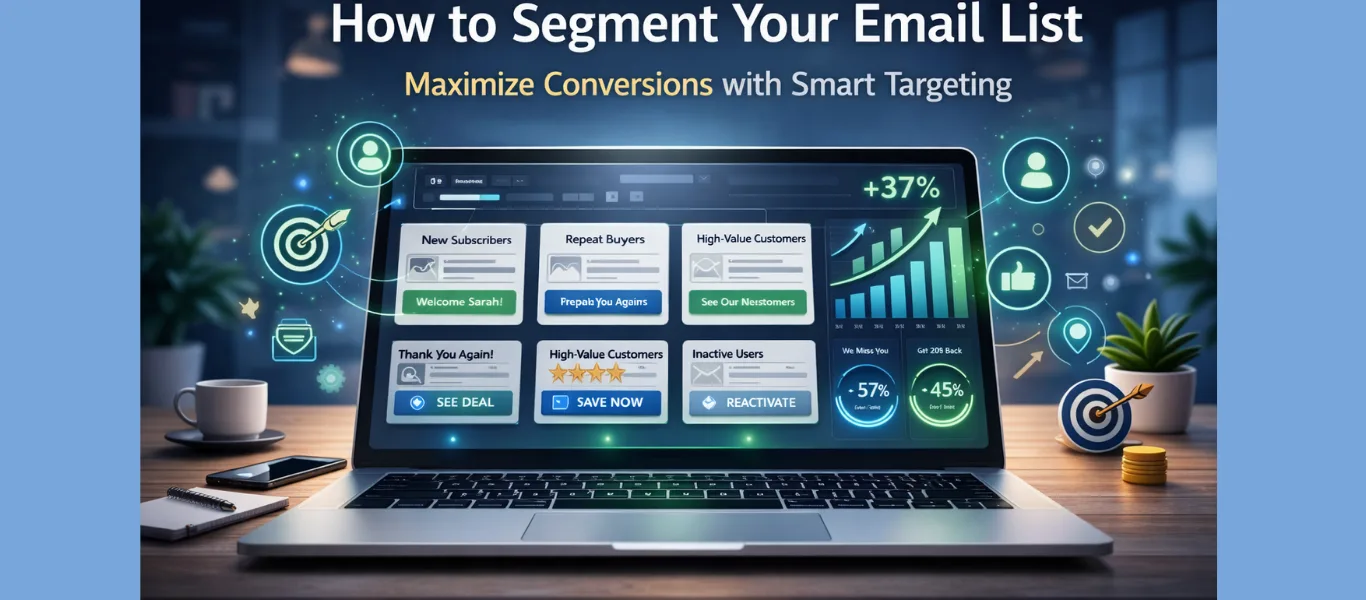
🪄 How to Segment Your Email List for Maximum Conversions
Most email lists don’t fail because they’re too small.
They fail because they’re too generic.
If you’re sending the same message to everyone, you’re leaving clicks, conversions, and revenue on the table.
The solution?
Email list segmentation.
In this guide, you’ll learn how to segment your email list the right way — so every email feels personal, relevant, and impossible to ignore.
Why Email Segmentation Is a Game-Changer
Generic emails don’t convert.
People don’t want mass emails—they want relevance.
According to recent email marketing statistics
👉 https://www.statista.com/topics/1440/email-marketing/
Segmented campaigns consistently outperform non-segmented ones in both engagement and revenue.
With proper segmentation, you can:
✔ Increase email open rates
✔ Boost click-through rates
✔ Improve customer engagement
✔ Drive more conversions
The Psychology Behind Segmentation
Segmentation works because it aligns with consumer behavior psychology
👉 https://www.simplypsychology.org/consumer-behavior.html
People respond better when messages feel:
- Relevant
- Timely
- Personalized
This is why targeted email campaigns outperform generic blasts.
What Is Email Segmentation?
Email segmentation is the process of dividing your audience into smaller groups based on behavior, preferences, or demographics.
If you want a deeper understanding of segmentation concepts, explore this guide on
customer segmentation strategies
👉 https://www.investopedia.com/terms/m/marketsegmentation.asp
7 Powerful Ways to Segment Your Email List
Let’s break down the most effective segmentation strategies used by high-performing e-commerce brands.
1️⃣ Segment by Purchase Behavior
Your best data comes from what people actually buy.
Segment users into:
- First-time buyers
- Repeat customers
- High-value customers
Example:
Send a loyalty reward email to repeat buyers:
“You’ve been with us for a while—here’s something special.”
This builds customer loyalty and repeat purchases.
2️⃣ Segment by Engagement Level
Not all subscribers are equal.
Create segments like the following:
- Active users (opened emails recently)
- Inactive users (no engagement in 30–60 days)
Strategy:
- Send exclusive offers to active users
- Run re-engagement campaigns for inactive users
👉 Related: https://blogwithjawed.com/build-long-term-customer-loyalty-through-email/
3️⃣ Segment by Browsing Behavior
What people view tells you what they want.
Use:
- Viewed products
- Abandoned carts
- Category interest
Example:
“You checked this out — it’s almost gone.”
This combines personalization + urgency for higher conversions.
4️⃣ Segment by Demographics
Basic but powerful.
Segment by:
- Location
- Age
- Gender
Example:
Promote winter products to cold regions only.
This improves relevance and avoids wasted impressions.
5️⃣ Segment by Email Activity
Track how users interact with your emails.
Segment into:
- Frequent openers
- Clickers
- Non-responders
Strategy:
Send high-value offers to engaged users and simpler emails to cold audiences.
6️⃣ Segment by Customer Lifecycle Stage
Different stages need different messaging.
Key stages:
- New subscribers
- Leads
- First-time buyers
- Loyal customers
Example:
New subscriber → Welcome sequence
Customer → Upsell / cross-sell emails
👉 Learn more: https://blogwithjawed.com/crafting-post-purchase-emails-that-drive-repeat-sales/
7️⃣ Segment by Interests & Preferences
Let users tell you what they want.
Use:
- Surveys
- Preference centers
- Click behavior
Example:
“Only show me deals on [category].”
This makes your emails hyper-relevant.
Step-by-Step Email Segmentation Strategy
Here’s a simple framework to implement today:
Step 1: Collect the Right Data
Start with:
- Email signups
- Purchase history
- Website behavior
Step 2: Choose 2–3 Key Segments First
Don’t overcomplicate.
Start with:
✔ New vs returning users
✔ Engaged vs inactive
✔ Buyers vs non-buyers
Step 3: Personalize Your Messaging
Use:
- Names
- Product recommendations
- Behavior triggers
👉 Related: https://blogwithjawed.com/email-personalization-tactis/
Step 4: Automate Your Campaigns
Set up flows like:
✔ Welcome sequence
✔ Abandoned cart
✔ Re-engagement emails
Automation ensures consistency and scale.
Use tools and benchmarks from
email marketing benchmarks
👉 https://mailchimp.com/resources/email-marketing-benchmarks/
to optimize performance.
Step 5: Test and Optimize
Track:
- Open rates
- Click rates
- Conversion rates
Improve continuously.
Real-World Example
An e-commerce clothing brand segmented its audience into the following:
- New visitors
- Repeat buyers
- Cart abandoners
Then, I created tailored email campaigns for each group.
Results:
✔ 30% increase in email conversions
✔ Higher engagement rates
✔ More repeat purchases
Segmentation = smarter marketing.
Common Segmentation Mistakes to Avoid
❌ Over-segmenting too early
❌ Ignoring data
❌ Sending irrelevant content
❌ Not updating segments regularly
👉 Also read: https://blogwithjawed.com/ecommerce-email-copywriting-mistakes-that-kill-sales/
Pro Tips for Maximum Conversions
Want next-level results?
- Combine segmentation + personalization
- Use urgency and scarcity in segmented emails
- Create exclusive offers for VIP segments
- Focus on customer lifetime value, not just single sales
👉 Advanced guide: https://blogwithjawed.com/scarcity-urgency-ecommerce-emails/
Final Thoughts
If you want better results from email marketing…
Stop sending more emails.
Start sending smarter ones.
Because the right message to the right person at the right time…
Is what drives conversions.
✔ With proper email list segmentation, you can:
- Increase conversions
- Improve engagement
- Build stronger relationships
- Drive more revenue
If you want help crafting high-converting segmented email campaigns:
👉 https://blogwithjawed.com/copywriting-services/
Or contact:
emailcopywriting.pro@gmail.com